
ArmorDB Blog
Comparisons & Data Specs
Structured comparisons, feature breakdowns, and decision guides closely aligned with managed PostgreSQL use cases.
PostgreSQL Extension Policy for Managed Databases
Compare PostgreSQL extension choices for managed databases, including contrib modules, trusted extensions, provider support, custom code, and external services.
PostgreSQL Online Schema Change Options Compared
Compare PostgreSQL online schema change patterns for production apps: concurrent indexes, staged constraints, nullable columns, backfills, and maintenance windows.

PostgreSQL Queue Options Compared: SKIP LOCKED, LISTEN/NOTIFY, and External Queues
A practical comparison of PostgreSQL-backed queue patterns, LISTEN/NOTIFY signaling, advisory locks, and when to use an external queue instead.
Managed PostgreSQL Instance Sizing: CPU, Memory, Storage, and Connections
A practical managed PostgreSQL instance sizing guide for choosing CPU, memory, storage, I/O, and connection capacity without overbuying too early.

PostgreSQL Regular vs Unlogged vs Temporary Tables: Which Should You Use?
Compare PostgreSQL regular, unlogged, and temporary tables by durability, replication, connection pooling, and production use case.
PostgreSQL High Availability Options Compared: Backups, Replicas, Failover, and Multi-Region
Compare PostgreSQL high availability patterns by RTO, RPO, operational complexity, and the failures each option actually handles.
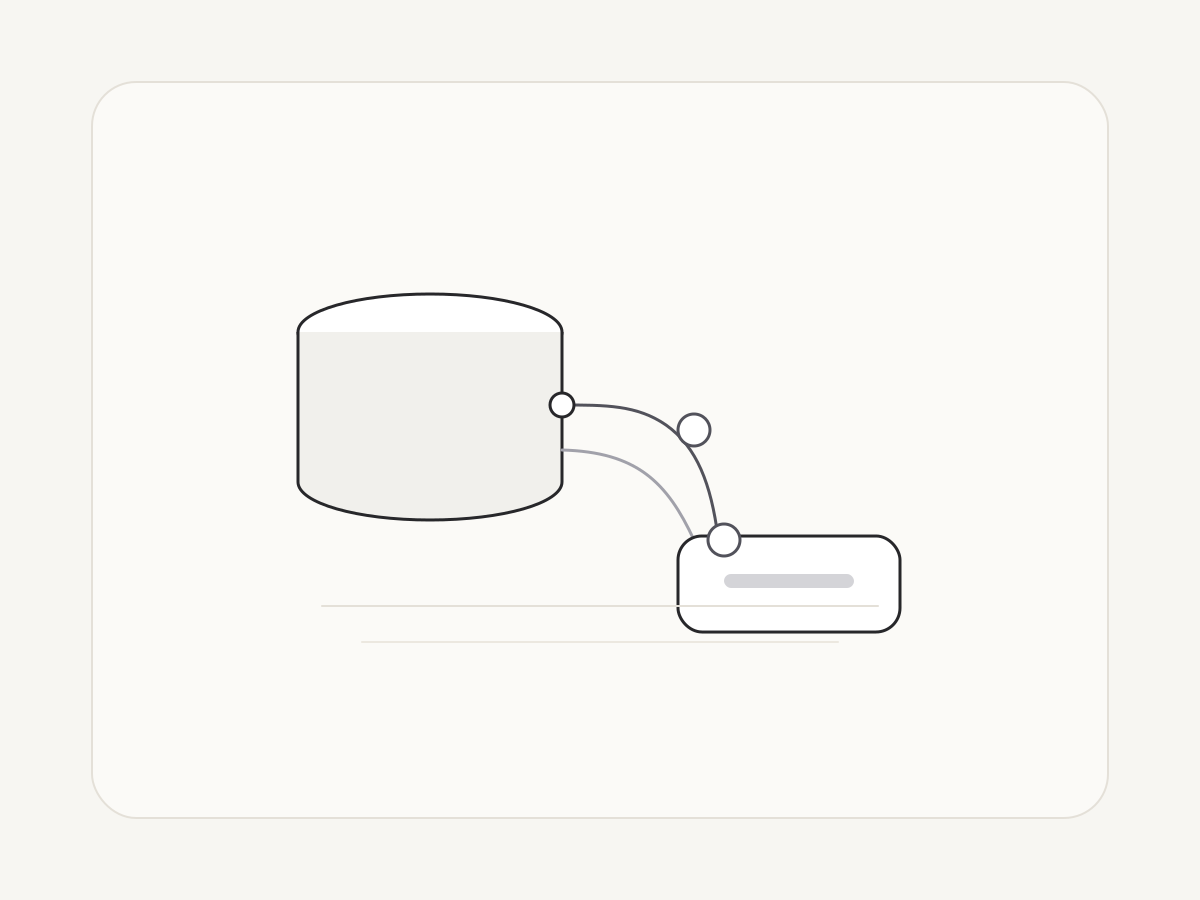
PostgreSQL Branching vs Staging Restores vs Read Replicas: A Practical Comparison
Compare PostgreSQL branching, staging restores, read replicas, and logical replication for safer previews, migrations, QA, and production troubleshooting.

PostgreSQL Search Options Compared: LIKE, Trigrams, Full-Text, and External Search
A practical decision guide for choosing PostgreSQL search patterns, pg_trgm, full-text search, JSONB search, or an external search engine.

PostgreSQL Primary Key Types Compared: Identity, UUID, and UUIDv7
A practical comparison of PostgreSQL primary key choices for SaaS teams, including identity columns, bigserial, random UUIDs, and time-ordered UUIDv7.
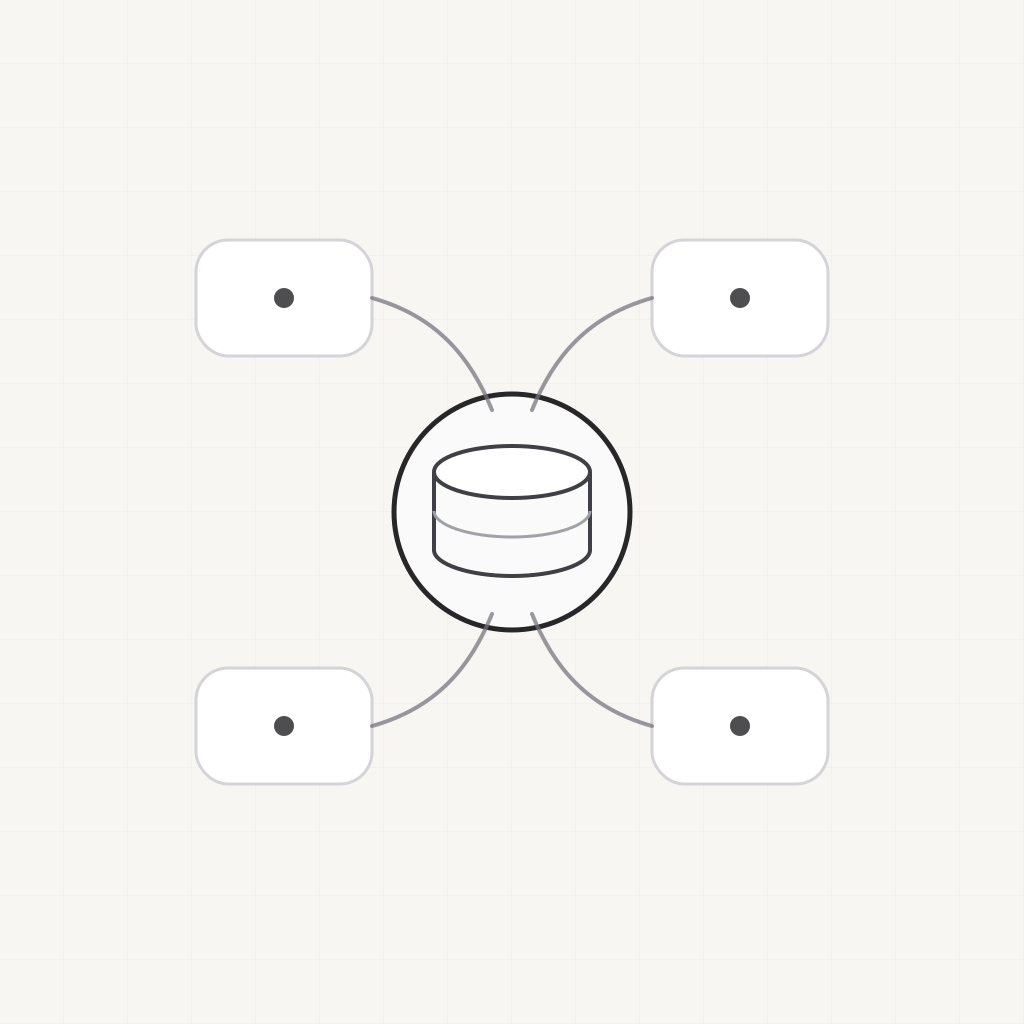
PostgreSQL Connection Pooling Options Compared for Production Apps
Compare direct PostgreSQL connections, application pools, PgBouncer, and managed pooling so you can choose the right connection architecture for a growing app.

PostgreSQL Backup Methods Compared: Dumps, Base Backups, WAL, and Snapshots
Compare PostgreSQL backup methods by restore goal, recovery window, operational cost, and managed database fit before choosing a production policy.
PostgreSQL schema migration tools comparison for production teams
Compare migration tools and workflows for PostgreSQL applications, including SQL-first, ORM-driven, declarative, and managed change-control approaches.
PostgreSQL Storage Autoscaling vs Fixed Capacity
A practical comparison of PostgreSQL storage autoscaling, fixed capacity, monitoring signals, and upgrade decisions for managed database teams.
PostgreSQL Index Types Compared: B-tree, GIN, GiST, BRIN, and Hash
Compare PostgreSQL index types by workload, query pattern, write cost, and production fit before adding another structure to your database.
Serverless vs Provisioned PostgreSQL: How to Choose for Production
Compare serverless and provisioned PostgreSQL for latency, cost, pooling, operations, and production readiness before you choose a managed database architecture.
PostgreSQL Encryption Options Compared: TLS, Disk, and Field-Level Controls
Compare PostgreSQL encryption in transit, encryption at rest, pgcrypto, and application-level encryption so you can choose the right control for each risk.
PostgreSQL sslmode Values Compared: Which One Should You Use?
Compare PostgreSQL sslmode settings, certificate validation behavior, and practical production choices for managed and self-hosted databases.
PostgreSQL SaaS Tenancy Models: Shared Tables, Schemas, or Databases?
Compare shared-table, schema-per-tenant, and database-per-tenant PostgreSQL designs, with guidance on isolation, migrations, pooling, backups, and when to switch.
PostgreSQL Isolation Levels Compared for SaaS Applications
Compare PostgreSQL Read Committed, Repeatable Read, and Serializable isolation for production SaaS workloads, including retries, locks, and when each level fits.

PostgreSQL Authentication Methods Compared: SCRAM, MD5, TLS, and Client Certificates
A practical comparison of PostgreSQL authentication methods for production apps, including SCRAM, legacy MD5, TLS verification, client certificates, and role design.
PostgreSQL High Availability: Failover, Replication, and Backups Compared
A practical comparison of PostgreSQL high-availability building blocks, from streaming replicas and failover to PITR backups and logical replication.

PostgreSQL Extensions for SaaS: Which Ones Belong in Your First Stack?
A practical comparison of PostgreSQL extensions for SaaS teams, including observability, search, case-insensitive text, vector search, and geospatial workloads.
PostgreSQL Partitioning vs Indexing vs Read Replicas: Which Scaling Move Fits?
A practical comparison of PostgreSQL partitioning, indexing, and read replicas for teams deciding how to scale reads, writes, maintenance, and cost.
PostgreSQL JSONB vs Relational Tables: How to Choose the Right Schema
A practical comparison of PostgreSQL JSONB, relational columns, and hybrid schemas for SaaS teams deciding what to model, index, and constrain.

Managed PostgreSQL Pricing: What to Compare Before You Choose
A practical comparison guide to managed PostgreSQL pricing, including compute, storage, backups, high availability, networking, and operational costs.

PostgreSQL Migration Strategies: pg_dump vs Logical Replication vs pg_upgrade
Compare pg_dump, logical replication, and pg_upgrade for PostgreSQL migrations, with guidance on downtime, cutover risk, and managed database fit.

PgBouncer Pooling Modes: Session, Transaction, and Statement
A practical comparison of PgBouncer pooling modes, what each one preserves, and which mode fits most managed PostgreSQL workloads.

Managed PostgreSQL vs Self-Hosted PostgreSQL: Which Should You Choose?
A practical SEO guide comparing managed PostgreSQL and self-hosted PostgreSQL across cost, control, security, backups, and migration tradeoffs.

The Zero Cloud Tax Philosophy
Learn why ArmorDB keeps managed PostgreSQL affordable through efficient infrastructure, practical operations, and transparent pricing without hidden cloud markups.
Keep reading across the ArmorDB blog.
Browse practical PostgreSQL guides by format, from release-driven news to deep technical operations articles.